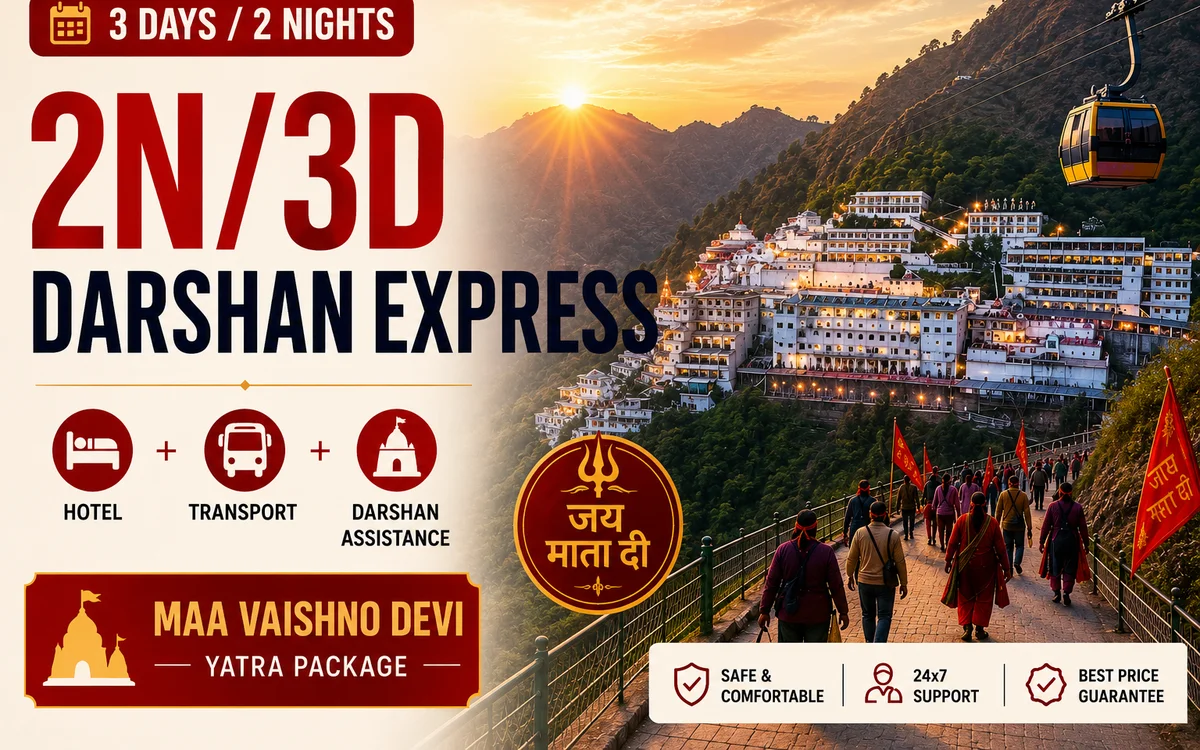
3 Days / 2 Nights
2N/3D Darshan Express
Hotel + transport + darshan assistance
Starting ₹6,499
Customise ThisTell us your dates and travellers — get an instant day-wise itinerary and price, no waiting for a callback.
Free instant itinerary · No advance needed
City, dates, travellers, and how you’d like to travel — takes under a minute in the wizard.
A day-wise plan with hotel, transport, and helicopter costs updates live beside you as you choose.
Like what you see? Send it to our team on WhatsApp and we’ll confirm and lock your booking.
3 Days / 2 Nights
Hotel + transport + darshan assistance
Starting ₹6,499
Customise This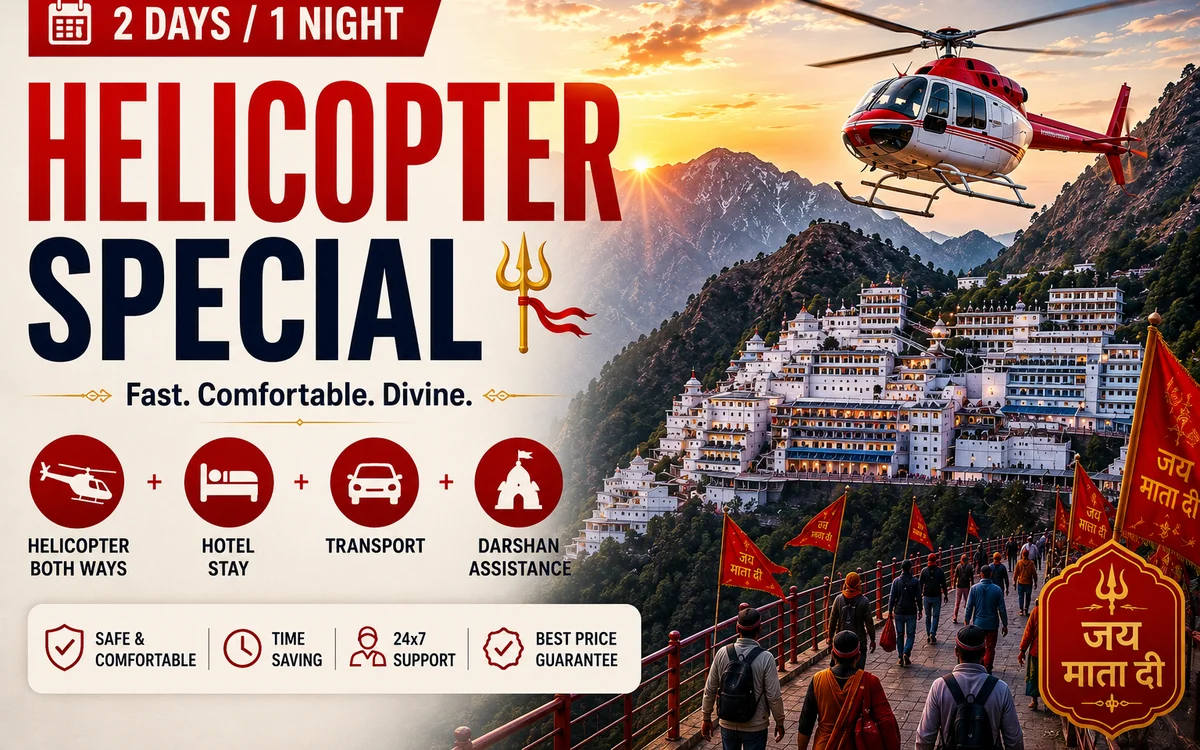
2 Days / 1 Night
Helicopter both ways + hotel + transport
Starting ₹9,999
Customise This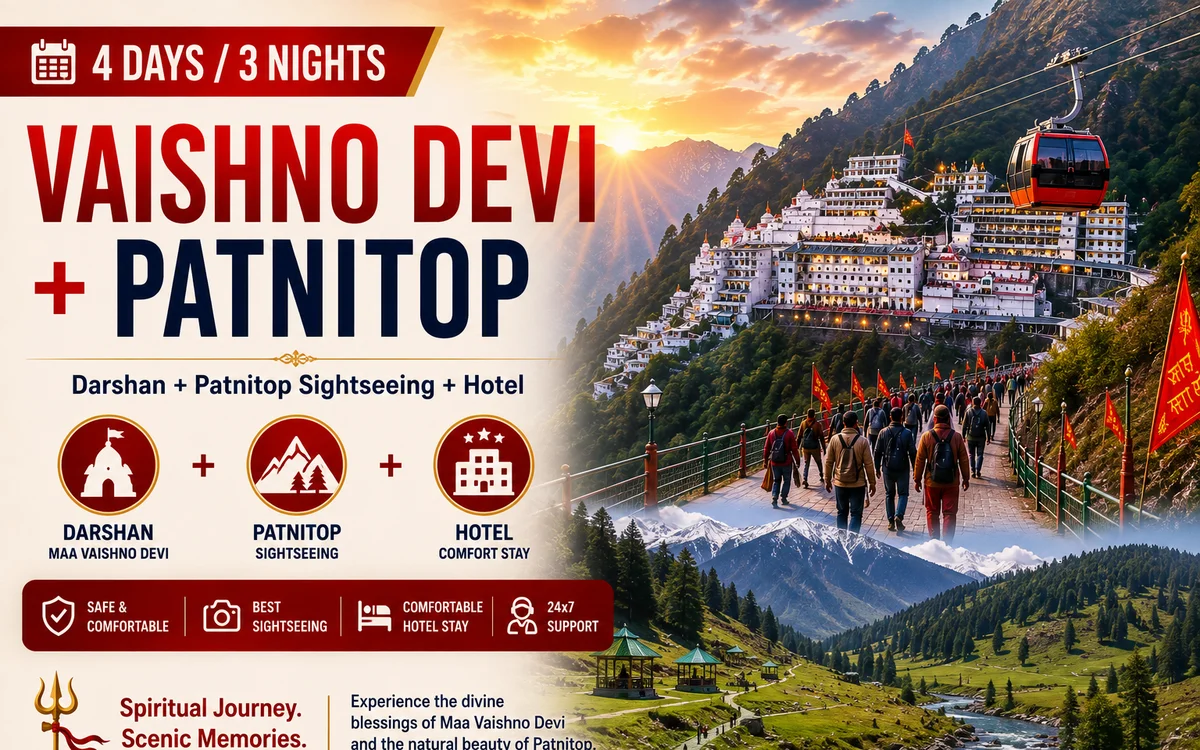
4 Days / 3 Nights
Darshan + Patnitop sightseeing + hotel
Starting ₹10,999
Customise This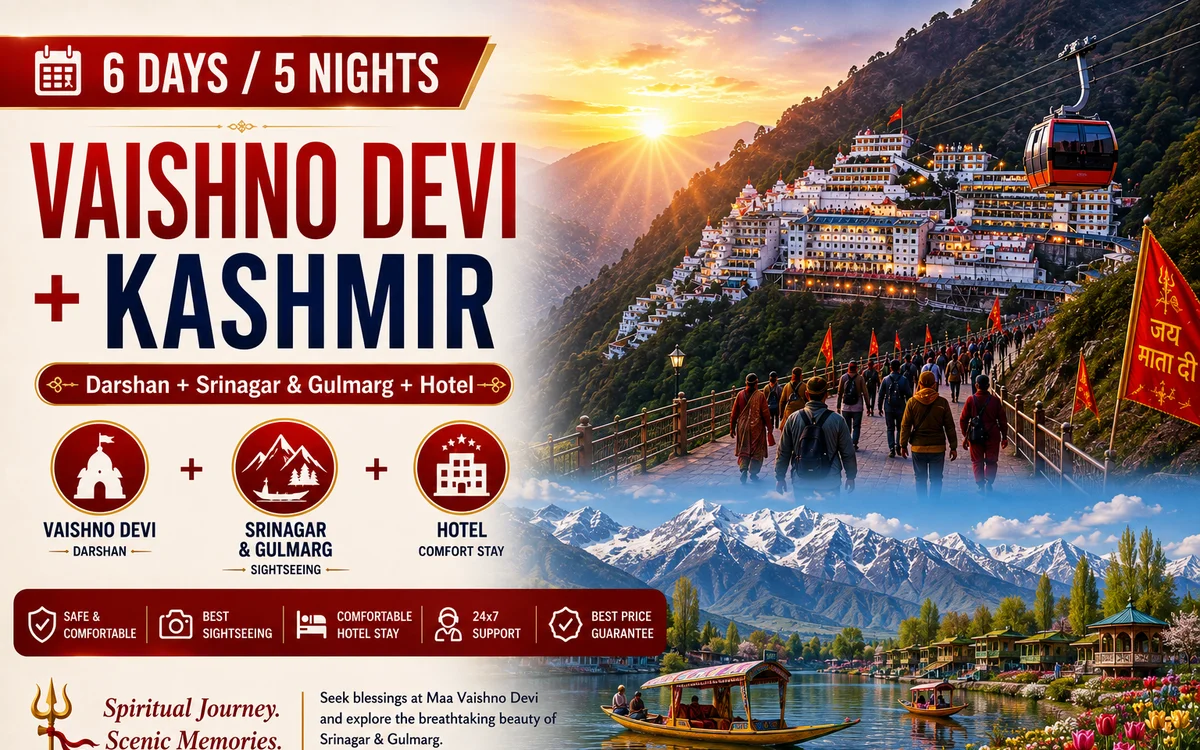
6 Days / 5 Nights
Darshan + Srinagar & Gulmarg + hotel
Starting ₹18,999
Customise ThisThe Vaishno Devi shrine is a natural cave high in the Trikuta hills in Jammu and Kashmir, dedicated to the goddess Vaishno Devi. Inside, she is worshipped as three natural rock formations called pindis, representing Maha Kali, Maha Lakshmi and Maha Saraswati. Pilgrims reach it from the foothill town of Katra by a climb of about 12 km from Banganga, though ponies, palkis, a battery car for part of the route and a helicopter to Sanjichhat make the climb easier for those who need it.
Millions of people make the journey each year. Some go once, after a vow or in thanks for a wish granted, and others go annually. Whatever brings you, the practical shape of the trip is the same, and knowing it in advance makes it gentler.
Most first-time pilgrims should plan three days and two nights. On day one you reach Katra, check in, rest and register for the free yatra RFID card. You eat an early, light dinner and sleep by nine. On day two you wake before dawn, take a short taxi ride to Banganga and climb at an easy pace, resting at Ardhkuwari, the halfway point. You reach the Bhawan by late morning or early afternoon, deposit your belongings in the free cloakroom, have darshan and descend in the afternoon.
Day three is for rest. You sleep in, take a slow breakfast, buy prasad and gifts and travel home in the afternoon. That rest night after the climb is what makes the trip pleasant, and it is the first thing people cut and later regret. Our complete yatra guide covers every stage in detail.
We are a private tour planner, not the Shri Mata Vaishno Devi Shrine Board. We plan and price the parts of the trip that a planner can: your hotel in Katra, local transport, the sequence of days and optional extras such as sightseeing. We help you plan around the Shrine Board's own services and walk you through them.
Official services stay official. Yatra registration is free and issued by the Shrine Board. Helicopter tickets, battery car tickets and Shrine Board rooms are booked through the Shrine Board's process at maavaishnodevi.org, at fixed published fares. We do not mark those up, and we say so plainly so that you know what you are paying for.
The Build My Yatra wizard asks a handful of questions: where you are starting from, how many are travelling, which dates, what kind of hotel, whether you want a helicopter and whether you want to add places such as Patnitop or Kashmir. As you answer, it builds a day-wise itinerary and an itemised price, live. There is no obligation and no advance payment to get a quote.
Once you submit your details, our team checks availability, confirms the final price and guides you through registration and any Shrine Board bookings. If you prefer to talk, message us on WhatsApp with your dates and group size.
March to mid-June and mid-September to November are the most comfortable months. Navratri is the most auspicious time and the most crowded. The monsoon, from July to early September, raises the risk of landslides and disruption, and winter is cold at the Bhawan, with occasional snow. The shrine is open every day of the year, so the choice is a trade-off between weather, crowds and cost. Our month-by-month guide goes through each season.
Katra has its own railway station with direct trains from Delhi and several other cities, and the nearest airport is Jammu, roughly 50 km away. Buses and cabs run along National Highway 44. Our guide on how to reach Katra compares the options, and we have pages for travellers starting from Delhi, Mumbai, Bangalore, Kolkata, Chandigarh and other cities, with route options and starting prices for each.
Katra has hotels at every price, from simple rooms from about ₹1,200 a night to a full-service resort with a spa. We compare them in our Katra hotels guide with real room tables, worked costs and sample plans. If you only want a shortlist, start with the Top 10 or the budget guide. None of the hotels is at the start of the trek, so plan a short taxi or auto ride to Banganga on yatra morning.
A standard three-day trip for two adults, in a deluxe hotel with no helicopter, comes to roughly ₹12,000 to ₹13,000 on our standard rates, before the cost of getting to the region. Adding a helicopter both ways, at the Shrine Board's published fare, brings it to around ₹22,000. Hotel category, group size, the time of year and any extras move the number up or down. Our trip cost guide shows every line with worked examples.
A little preparation changes the trip. Walk thirty minutes a day for a few weeks in the shoes you will wear. Pack for two climates, since the Bhawan is cooler than Katra. Carry ID for every traveller, a small day bag, water, snacks, medicines and a spare pair of socks, and leave electronics and valuables at the hotel. Our packing list and list of mistakes to avoid cover the details.
If you have time, extend the trip. Quiet stops such as Baba Dhansar and Mansar Lake suit the day after the climb. Patnitop is a cool hill station for a rest day. Amritsar and the Kashmir valley with Srinagar and Gulmarg turn the yatra into a longer holiday. Browse all the attractions to plan.
Many of our travellers are families, and the yatra is entirely manageable with the right plan. For elders, we plan transport for each stage: a helicopter or battery car for part of the route, a pony or palki where needed, and a hotel with a lift and a quiet room. We remind families that the descent is often harder on knees than the climb, so the way down needs as much planning as the way up. For children, we suggest a family room, regular meals and sleep, and warm clothes, since the Bhawan is cool even in summer.
Tell us who is travelling and what each person can manage. The wizard asks for ages and mobility needs so the plan, and the price, fit your group and not a generic one.
Our aim is simple: a calm trip that leaves you with the darshan to remember and not the logistics. We try to be plain about what is included, honest about what is not and clear about which parts belong to the Shrine Board. If something changes, such as weather, a closed road or a delayed train, we help you adjust. And if you decide that the trip is simpler to book yourself, our guides give you the facts to do it well.
Helicopter tickets are released by the Shrine Board in batches and sell out fast, especially in season. Tell us your travel dates and we’ll handle the booking window for you, or add "Helicopter" in the wizard and we’ll confirm availability directly.
March to October offers the most comfortable trekking weather, while the Navratri months (April and October) are the most auspicious but also the most crowded. December to February is colder with a chance of snow near Bhavan.
Yes — battery cars, palkis, and ponies cover most of the 13 km trek from Katra, and the helicopter reduces it to a short walk from Sanjichhat. Tell us about any mobility needs and we’ll plan accordingly.
Every pilgrim needs a free Yatra Slip (RFID card) from the Katra registration counters or the Shrine Board app before starting the trek — it is used for safety tracking and darshan queue entry. We guide you through this on arrival.
Every quote breaks down hotel, transport, meals, and any add-ons you selected in the wizard line by line before you pay anything. Helicopter and darshan-slot costs are shown separately since they depend on Shrine Board availability.
No advance is required to get your custom itinerary and price — that part is always free. Advance payment (when needed to lock hotel or helicopter inventory) is discussed only after you’re happy with the plan.
No forms, no waiting — tell us what you need and get a real answer in minutes.
Yatra Assistant
Online · replies instantly